
Spacecraft Components |
Rocket Engine Parts & High-Performance Alloys
We produce precision spacecraft components and satellite castings through our patented LAMP™ ceramic 3D printing and additive manufacturing technology, serving aerospace manufacturers, defense primes, and launch vehicle programs across the United States — from rocket engine parts and rocket propellant tanks to thermal control hardware and structural components, with zero tooling investment required.
Benefits of Spacecraft Component Manufacturing in the United States
Zero Tooling Investment Required
Traditional foundries require $50,000–$200,000 or more in hard tooling before a single part can be cast. Our ceramic 3D printing produces shell molds directly from CAD files — eliminating tooling costs. Key advantages include:
Accelerated Development Cycles
Traditional investment casting takes 52–80 weeks. Our DirectPour™ process delivers first parts in as little as 10 days — a 10x lead time improvement that accelerates engine design validation for combustion chambers, rocket engines, and space shuttle components. Cycle-time benefits include:
Space-Qualified Materials & Precision
We cast vacuum-melt nickel superalloys — single-crystal, directionally-solidified, and equiaxed — for rocket engines and spacecraft propulsion systems, processed to AMS 2175 Class 1 Grade A. Every casting is dimensionally verified for weight, surface, and tolerance specifications. Precision capabilities include:
Industry Applications
Rocket Component Manufacturing
We produce precision component castings for advanced rocket engine and turbine engine programs. These propulsion systems burn cryogenic propellants and operate under extreme thrust conditions — placing exceptional demands on every cast component across the engine cycle. Our LAMP™ technology enables the complex internal geometries, high-pressure combustion chamber features, and integrated cooling channels these castings require. Rocket component capabilities include:
- Combustion chamber and turbopump housing castings in nickel superalloys.
- Complex internal cooling channel geometry integrated directly into the ceramic shell.
- Both air-melt and vacuum-melt alloy processing for solid rocket motor components and propellant system parts.
High-Performance Alloys
Spacecraft, rocket engines, and jet engines operate at temperature extremes that only high-performance vacuum-melt superalloys can survive. We cast in CMSX-4, René N5, René 141, René 142, MAR-M247, IN718, IN713LC, and Inconel 625 — spanning equiaxed, directionally-solidified, and single-crystal microstructures for the most demanding turbine engine and space environments. Alloy capabilities include:
- Single-crystal CMSX-4 and René N5 for maximum thermal fatigue resistance.
- Directionally-solidified René 141 and René 142 for turbine blade and vane applications.
- MAR-M247 and IN100 for equiaxed high-temperature structural castings.
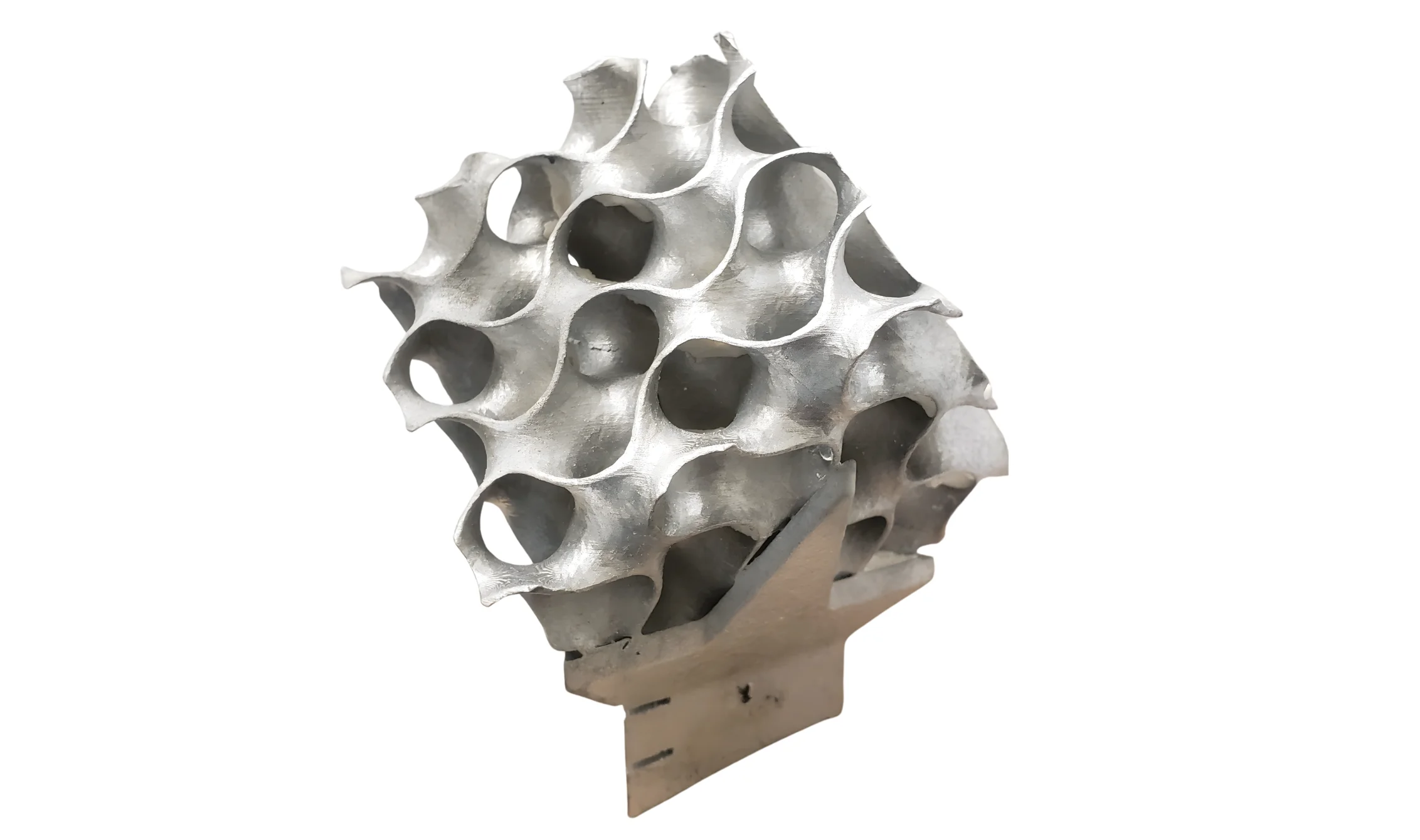
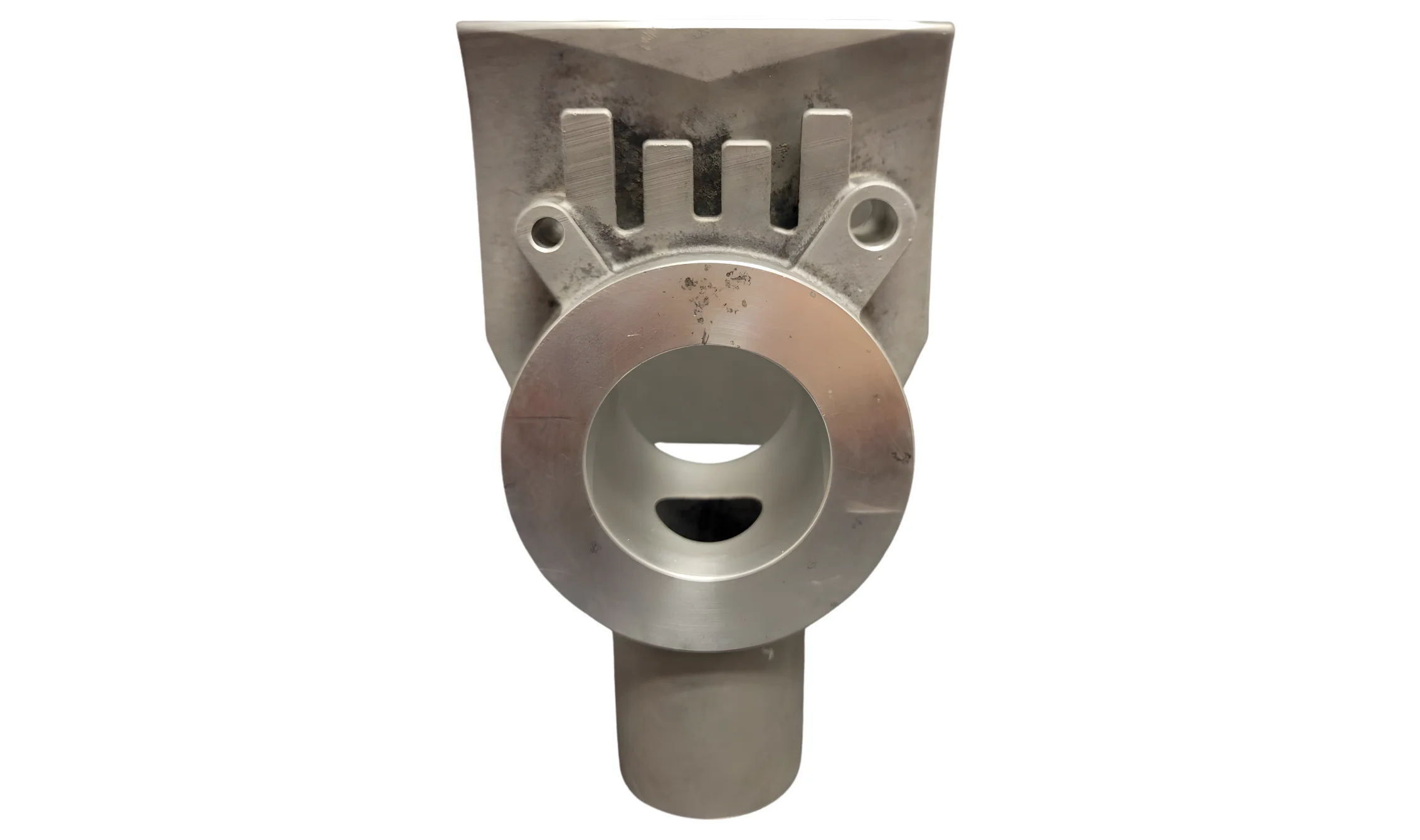
Space Applications Gallery
Our Spacecraft Component Process

Digital Design & Engineering
Every engagement begins with your CAD model and a detailed engineering review. Our team uses casting simulation software to analyze fill patterns, solidification behavior, and thermal gradients — optimizing shell geometry for your specific alloy and application. Engineering steps include:
LAMP™ Ceramic 3D Printing
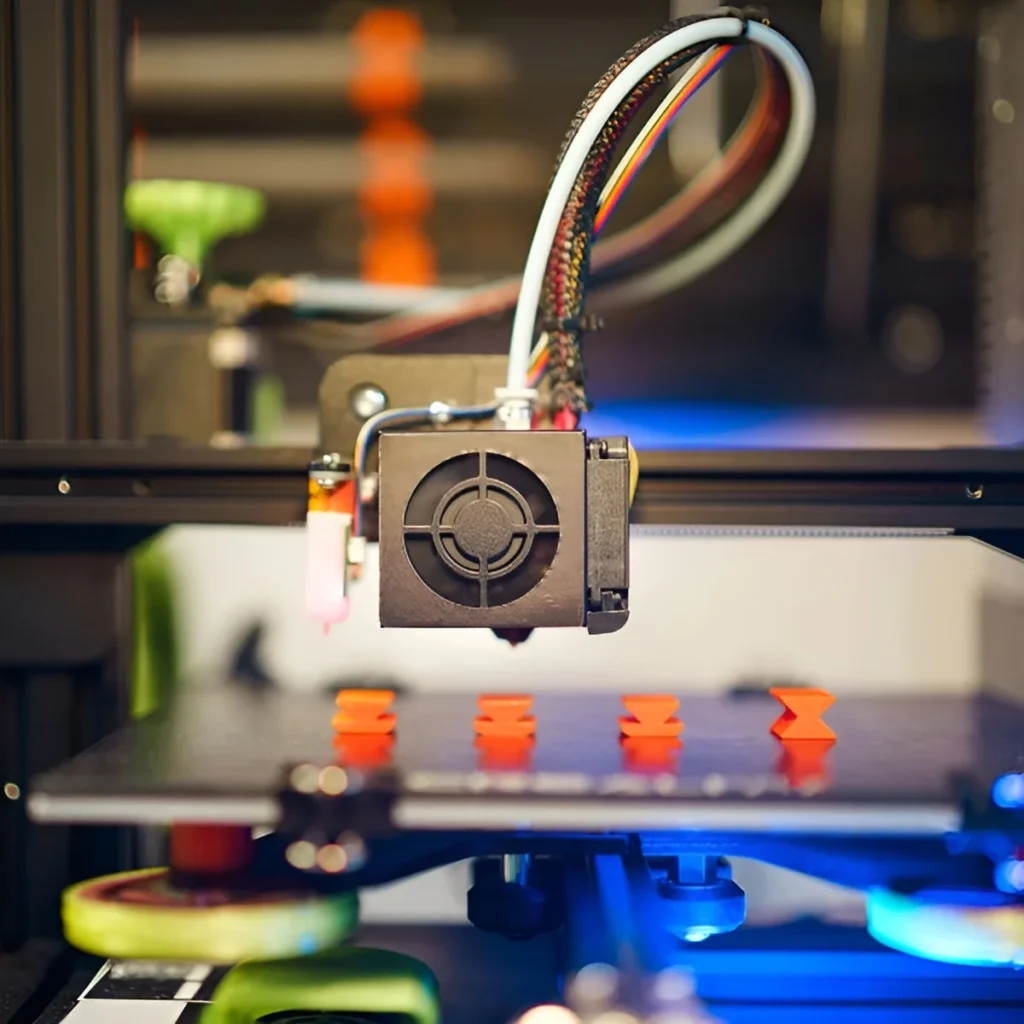
Our Large Area Maskless Photopolymerization (LAMP™) process builds fully integrated ceramic shell molds directly from CAD — eliminating wax patterns, multi-piece tooling, and manual shell-building steps. The result is faster iteration with no tooling investment. Print process highlights include:
Precision Casting & Quality Assurance
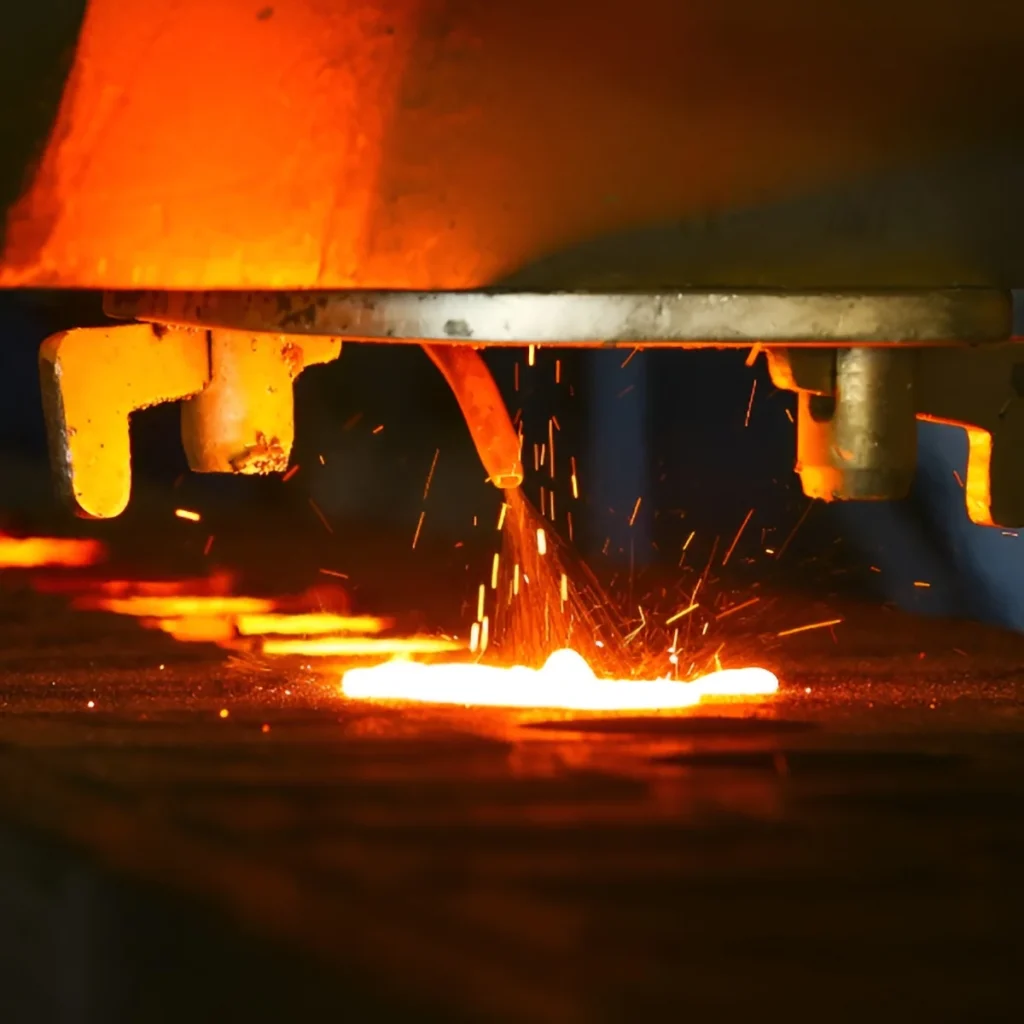
Following binder burnout and sintering, the ceramic shell is poured — on our casting floor or at a qualified partner foundry — in vacuum or air-melt alloy systems. Every casting then undergoes a fully documented inspection sequence before shipment. Quality assurance steps include:
Every flight-critical part ships with complete traceability documentation and AMS-compliant material certifications.
Why Choose Rapid Precision Castings for Space & Launch Components?
Proven Experience in Space Components
We have delivered flight-critical castings for NASA’s Space Launch System and hypersonic defense programs. Proven experience includes:
Advanced Security Clearances
Our active ITAR registration and Defense Industrial Base Consortium membership enable us to support the classified spacecraft and propulsion programs our government and prime contractor customers require, within a compliant, DFARS-aware manufacturing environment. Security-qualified capabilities include:
Revolutionary Manufacturing Technology
Our patented LAMP™ technology eliminates 7 of 12 traditional investment casting steps, enabling internal geometries — cooling channels, integrated cores, and thin-walled passages — that are impossible to produce with conventional tooling. Integration of 3D-printed patterns, simulation software, and digital process monitoring is improving yield rates, reducing defects, and shortening lead times across the aerospace casting industry. Technology advantages include:
Service Areas Across the United States
Rapid Precision Castings serves aerospace manufacturers, defense contractors, and space companies throughout the United States from our Atlanta, Georgia Digital Foundry™:
Major aerospace hubs, including California, Texas, Florida, Washington, and Colorado.
Defense manufacturing centers across all states with a significant military contracting presence.
Space industry clusters supporting NASA, Space Force, and commercial space ventures.
Research institutions and universities that are developing next-generation spacecraft technologies.
Government facilities requiring rapid prototyping and low-rate initial production capabilities.
Get Your Spacecraft Components Quote Today
Ready to accelerate your spacecraft component manufacturing with proven ceramic 3D casting technology? Our engineering team is ready to review your most demanding designs and tightest program schedules.
Get in Touch
Visit our contact us page
Frequently Asked Questions
Spacecraft components include propulsion systems (rocket engines, thrusters, and nozzles), structural elements, thermal control systems (heat exchangers and radiators), power systems, guidance systems, and data handling enclosures. Our ceramic 3D printing produces precision castings for all these subsystems, including integrated internal features impossible to achieve through traditional methods.
Spacecraft use vacuum-melt nickel superalloys (CMSX-4, René series, MAR-M247, IN718), high-temperature stainless steels, and aluminum alloys depending on thermal and structural requirements. Our capabilities span single-crystal, directionally-solidified, and equiaxed microstructures engineered for high-pressure combustion environments and the vacuum of space.
Spacecraft manufacturing combines investment casting, CNC machining, welding, and assembly — with combustion chambers, turbopump housings, and thermal hardware requiring casting for their complex geometries. Our Digital Foundry™ eliminates tooling requirements and enables rapid design iteration, delivering first castings in as little as 10 days.
Rapid Precision Castings serves aerospace manufacturers nationwide from our Atlanta, Georgia Digital Foundry™, including major hubs in California, Texas, Florida, Washington, and Colorado.