
LAMP™ Digital Investment Casting | 3D-Printed Ceramic Molds
Our LAMP™ (Large Area Maskless Photopolymerization) technology represents a fundamental reinvention of investment casting — producing precision ceramic shell molds directly from CAD files, with zero tooling, in a fraction of traditional lead times. From our Atlanta location, we deliver ready-to-pour ceramic shells to aerospace, defense, space, and industrial manufacturers across the United States. Whether you need a single prototype or a full production run, our 3D-printed ceramic shell molds for investment casting deliver the speed, precision casting quality, and cost efficiency that traditional lost-wax casting and sand casting simply cannot match.
Benefits of LAMP™ Digital Investment Casting
Revolutionary Speed and Efficiency
The LAMP™ process eliminates seven of the twelve steps typically required to produce a traditional investment casting shell. The result is a dramatically compressed timeline and a leaner, more reliable workflow:
For aerospace engineers, defense procurement teams, and industrial manufacturers under schedule pressure, that speed advantage is transformative.
Complete Tooling Elimination
Traditional investment casting demands $50K–$200K+ in upfront tooling before a single part can be poured. Our LAMP™ 3D printer produces ceramic shell molds with integrated internal cores that arrive at the foundry ready for pouring — with no upfront investment in hard tooling. Every shell is built digitally from your CAD file in a single operation, removing every traditional tooling dependency:
The result is a fully digital path from file to foundry-ready shell, with no tooling bottlenecks at any stage.
Superior Cost and Quality Performance
Our DirectPour™ process achieves measurable gains in both cost and quality by eliminating every process step that introduces variability. This automated, digital printing technology is engineered to produce parts equivalent to those using traditional investment casting in properties, surface finish, and dimensional accuracy. Key performance outcomes include:
The result is production-grade precision with no quality trade-offs.
Signs You Need Advanced 3D Printing Casting Molds for Your Company
Manufacturers across the United States are discovering that traditional investment casting can no longer meet the demands of modern precision manufacturing and rapid development cycles:
- Your current foundry quotes lead times of 3–18 months for new part tooling.
- Tooling costs of $25K–$250K+ are blocking prototype development and low-volume production.
- Complex internal geometries require multiple tooling sets and soluble wax or ceramic cores.
- Design changes force a complete tooling restart, adding months to development timelines.
- Some OEM partners experience lead times exceeding 12–24 months for complex aerospace castings such as gearboxes and constant-speed drives.
- Legacy aircraft and defense systems need rapid spare parts without original tooling.
Our LAMP™ technology addresses every one of these challenges through revolutionary ceramic 3D printing that entirely eliminates tooling dependencies.
LAMP™ Technology Deep Dive
LAMP™ (Large Area Maskless Photopolymerization) is a patented ceramic 3D printing technology that produces ready-to-pour shell molds with integrated cores directly from CAD files — no tooling required. Backed by 26+ patents across six countries and over $25M in R&D investment from government and private sources, it is the only production-scale ceramic mold printing system of its kind in North America:
Replaces the traditional 12-step investment casting process with a fully digital workflow.
Serves aerospace, defense, automotive, and industrial manufacturers.
Delivers first articles in days, not the weeks or months that tooling-based methods require.
LAMP™ is where precision metal casting meets the speed of additive manufacturing.
Process Workflow
The LAMP™ workflow moves from digital input to a ready-to-pour ceramic shell in a single, continuous additive manufacturing sequence — no tooling, no wax, and no multi-stage shell building required:
Digital Input: Customer provides CAD model of desired part.
Digital Design: Proprietary design workflow produces optimized shell mold design.
Digital Slicing: Software converts shell mold design into thousands of high-resolution bitmap images.
Slurry Preparation: A proprietary mixture of photosensitive binder resin and ceramic particles is prepared.
Layer Deposition: Ceramic slurry spread in 100-micron layers onto the build platform.
UV Photopolymerization: Printer head projects patterned UV light onto ceramic suspension, selectively curing resin.
Layer-by-Layer Building: Process repeats until the structure is complete.
Binder Burnout: Cured photopolymer resin removed through thermal processing.
High-Temperature Sintering: Ceramic structure is fired in a furnace to produce a highly dense article.
Ready-to-Pour Mold: Final ceramic shell with integrated cores ready for metal pouring.
Technical Specifications
Technical Specifications
Our LAMP™ Digital Casting Process
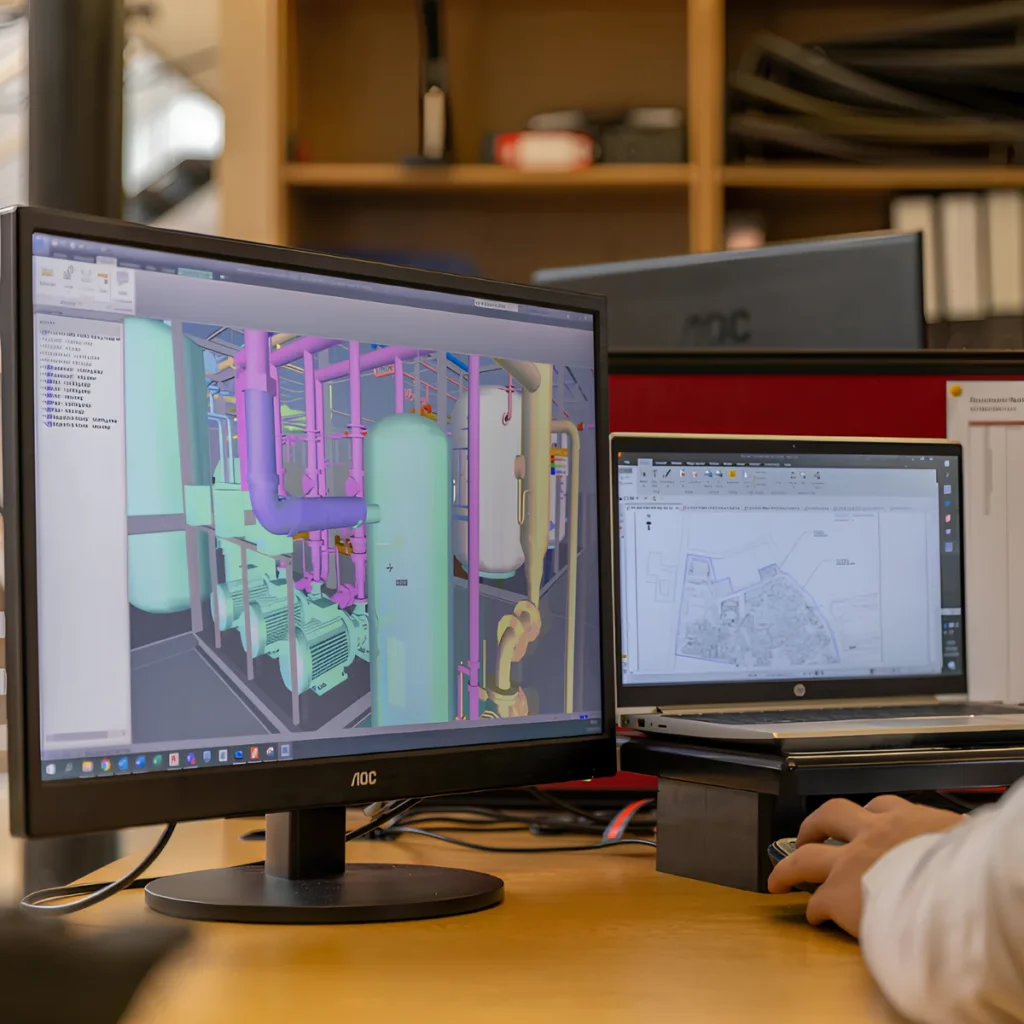
Digital Design and CAD Analysis
Every project begins with a CAD submission and a rapid engineering review that optimizes shell geometry before a single layer is printed. Our team converts your 3D model into print-ready bitmap slices in hours — not weeks:
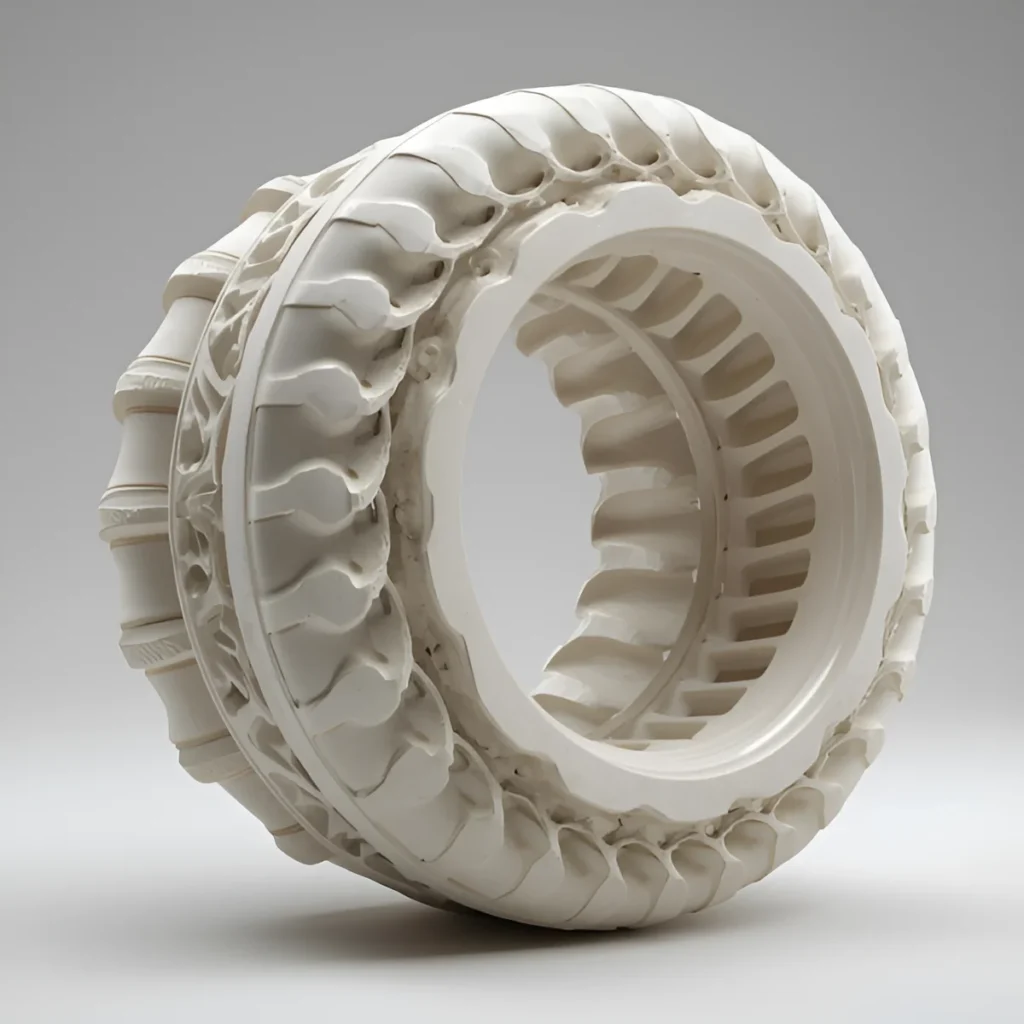
Ceramic Shell 3D Printing
The LAMP™ technology uses a ceramic resin cured with UV light to produce cores and molds — a hybrid of stereolithography and sand- or powder-based 3D printing. Each shell is built layer-by-layer at 15-micron resolution, producing a complete monolithic structure with integrated cores in a single uninterrupted print:
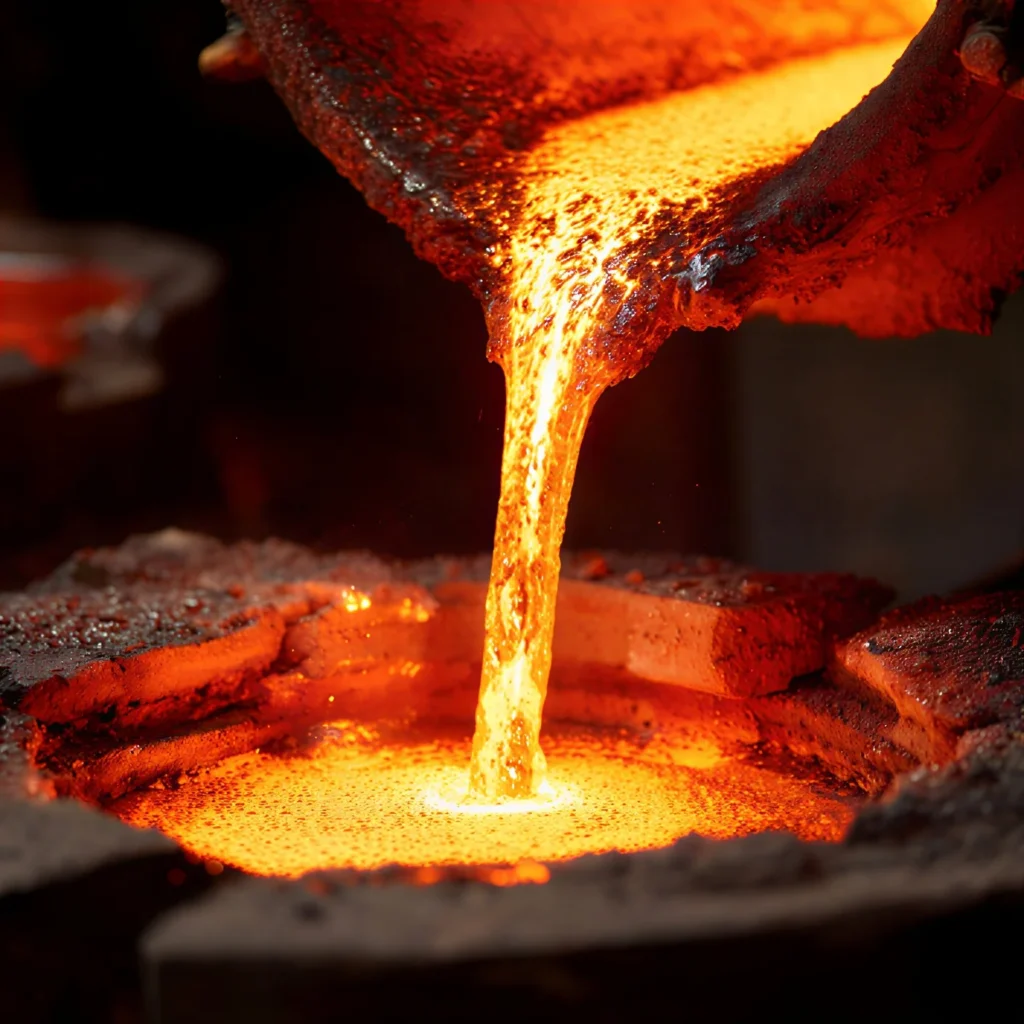
Thermal Processing and Metal Pouring
Once the ceramic shells are printed, they must go through a thermal processing step using well-established techniques for firing ceramics. Each shell moves through a controlled thermal sequence that eliminates the photopolymer binder and achieves full structural density before metal is poured:
3D Printing Casting Molds Cost Structure
We provide transparent pricing based on part volume, material selection, and complexity — not amortized tooling costs — making both single prototypes and production runs economically viable. Analysis shows that 3D printing a single dedicated core design with typical dimensions for aeroengine applications is less expensive than injection molding below approximately 1,800 units — and our LAMP™ platform extends those economics across an even broader range of applications and volumes.
Why Choose Rapid Precision Castings for LAMP™ Technology?
Proven Government and Defense Credentials
DDM Systems holds active ITAR registration and Defense Industrial Base Consortium membership, with $8M+ in completed government contracts and a ~$50M near-term pipeline. Our LAMP™ technology originated from a $6.3M DARPA program at Georgia Tech and is backed by over $25M+ in total investments from government (DARPA, ARPA-E, America Makes) and private sources — making it the only government-validated, production-scale ceramic mold printing capability in North America:
Strategic Industry Partnerships
Our partnerships span government laboratories, Tier 1 manufacturers, and leading research institutions — giving every customer access to technical depth no single foundry can replicate:
Broad Alloy Compatibility Across Industries
Our LAMP™ ceramic shells are compatible with various types of standard alloys across both air-melt and vacuum-melt investment casting processes — from aluminum and stainless steel to the most demanding nickel superalloys used in turbine engines:
Service Areas Across the United States
Rapid Precision Castings serves customers nationwide from our Atlanta headquarters, providing LAMP™ digital investment casting solutions to aerospace, defense, automotive, and industrial manufacturers throughout the United States:
Georgia and the Southeastern manufacturing corridor
Texas aerospace and energy sector clients
California defense contractors and technology companies
Ohio automotive and industrial equipment manufacturers
Connecticut and Massachusetts precision manufacturing firms
Florida space industry and defense contractors
All other states through our nationwide shipping network
Start Your 3D Printing Casting Project Today
Ready to move from CAD to cast metal in days instead of months — with zero tooling? Getting started is straightforward. Reach us through any of the following:
Frequently Asked Questions About 3D Printing Casting Molds
Our ceramic molds are compatible with hundreds of standard alloys across both air-melt and vacuum-melt processes — including stainless steels, aluminum alloys, nickel superalloys (Inconel 625/718), directionally solidified and single-crystal turbine alloys (René 141, CMSX-4), and medical-grade cobalt chromium moly. All castings meet ASTM standards and Investment Casting Institute-stated ranges.
Traditional investment casting typically requires multiple weeks or months to produce first articles — time consumed by core tooling design, wax tooling manufacture, and multi-stage shell building that LAMP™ eliminates. Our A-10 Thunderbolt II Control Input Arm went from part model to first casting in 10 days; a legacy fighter aircraft servo cover was completed in 39 days versus 100+ days through the traditional supply chain. The more complex the part, the greater the reduction in cost and lead time — making LAMP™ especially powerful for the most demanding aerospace and defense geometries.
Rapid Precision Castings' Atlanta facility is the exclusive provider of production-scale LAMP™ ceramic 3D printing for investment casting in North America, serving customers in all 50 states through our nationwide shipping and foundry partner network. Our active ITAR registration covers all defense applications. Contact us at 470-225-6987 or email support@rapidprecisioncastings.com to reach our engineering team directly.