
3D-Printed Ceramic Shell Molds
Our patented LAMP™ (Large Area Maskless Photopolymerization) technology produces investment-casting grade ceramic shell molds directly from your CAD file — no wax patterns, no hard tooling, no months-long lead times. Through our DirectPour™ process, we engineer and deliver ready-to-pour ceramic shell molds that meet ASTM standards and Investment Casting Institute-stated ranges for shell properties suitable for casting hundreds of qualified alloys. Whether you’re casting legacy aircraft components or gas turbine engine components in equiaxed (EQ), directionally-solidified (DS) or single-crystal (SX) superalloys, our Digital Foundry™ produces precision metal castings 10x faster at 50% lower cost than traditional investment casting.
Benefits of 3D-Printed Ceramic Shell Molds
Zero Tooling Investment Required
Traditional investment casting demands $50K–$200K+ in upfront tooling costs. Our process eliminates that barrier—submit a CAD file, and we begin immediately, with zero die investment required:
10x Faster Production Speeds
Traditional investment casting takes multiple weeks to months. Our LAMP™ technology eliminates 7 of 12 process steps and delivers castings in as little as 10 days:
Complex Geometries Made Possible
Our LAMP™ system enables complex shapes and geometries that conventional tooling cannot produce—an aviation oil pump requiring 12 tooling sets for pattern wax and soluble cores was reduced to two steps:
Signs You Need Advanced Ceramic Shell Casting
If your program faces any of these casting challenges, our DirectPour™ casting process is the right solution:
About Our 3D-Printed Ceramic Shell Molds
Foundry-Ready Shell Technology
Our LAMP™ System CPT6060 produces investment casting-grade ceramic shell molds with precision specifications that meet ASTM standards and Investment Casting Institute-stated ranges—delivered thermally processed and ready to pour:
- 600 x 600 x 600mm build volume (216 liters) with 15-micron pixel resolution.
- Cast metal surface finish under 4 microns RMS; part density exceeding 99.5%.
- Ceramic materials: fused silica and zirconium silicate formulations, preheat-compatible from 932–2012°F.
- Fired shell MOR of 2,800 psi ensures structural integrity throughout the metal pour.
Integrated Core Capabilities
Our LAMP™ system prints the ceramic shell and core as a single monolithic structure—eliminating separate core tooling, core and wax injection steps, and core and pattern assembly:
- Shell and core printed as one integrated-core shell mold—no assembly required.
- Complex internal passages, cast-in cooling holes and exit slots in turbine airfoils.
- Geometries essentially impossible with conventional tooling are produced in a single build.
- Core removal via KOH etching, fully compatible with existing foundry operations.
- Shell removal with water and grit blasting, fully compatible with existing foundry operations.
Partner Foundry Delivery
Submit your CAD model with alloy and quantity specs, and our engineering team designs the shell, prints it, and delivers a thermally processed, ready-to-pour ceramic mold — to our foundry partners or your in-house operation:
- Delivered ready-to-pour to Signicast (Form Technologies), our 4+ year strategic partner.
- Compatible with both air-melt and vacuum-melt investm.ent casting processes
- Works seamlessly with OEM in-house foundries and customer-preferred pour sites.
- Supports single prototypes through series production runs across hundreds of alloys.
Shell Mold Gallery
Gallery content coming soon.
Our Ceramic Shell Making Process
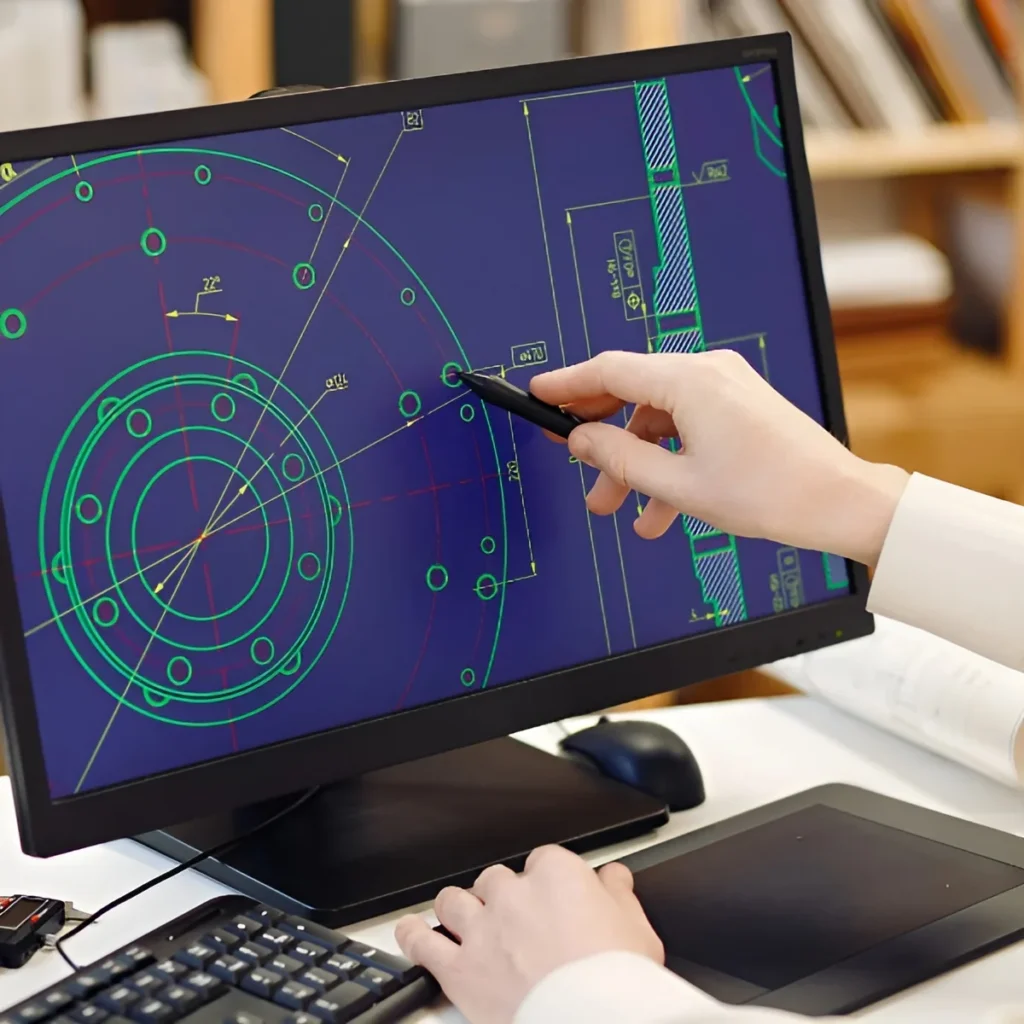
Digital Design and Engineering
Submit your CAD model with alloy and quantity requirements, and our engineering team resolves every design detail digitally—before a single layer is printed:
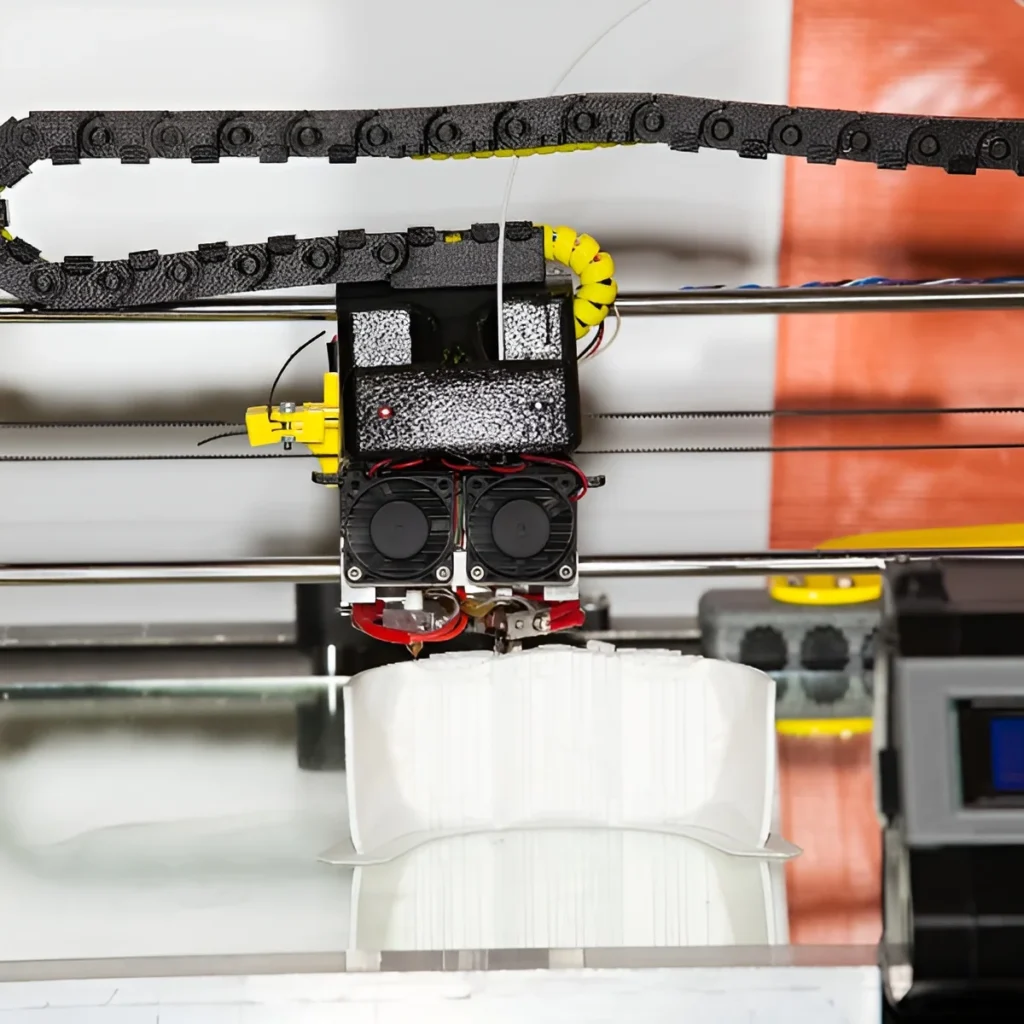
LAMP™ Ceramic 3D Printing
Our LAMP™ system builds each ceramic shell from a proprietary photosensitive ceramic slurry mixture of fine ceramic particles—layer by layer, with micron-level accuracy at production scale:
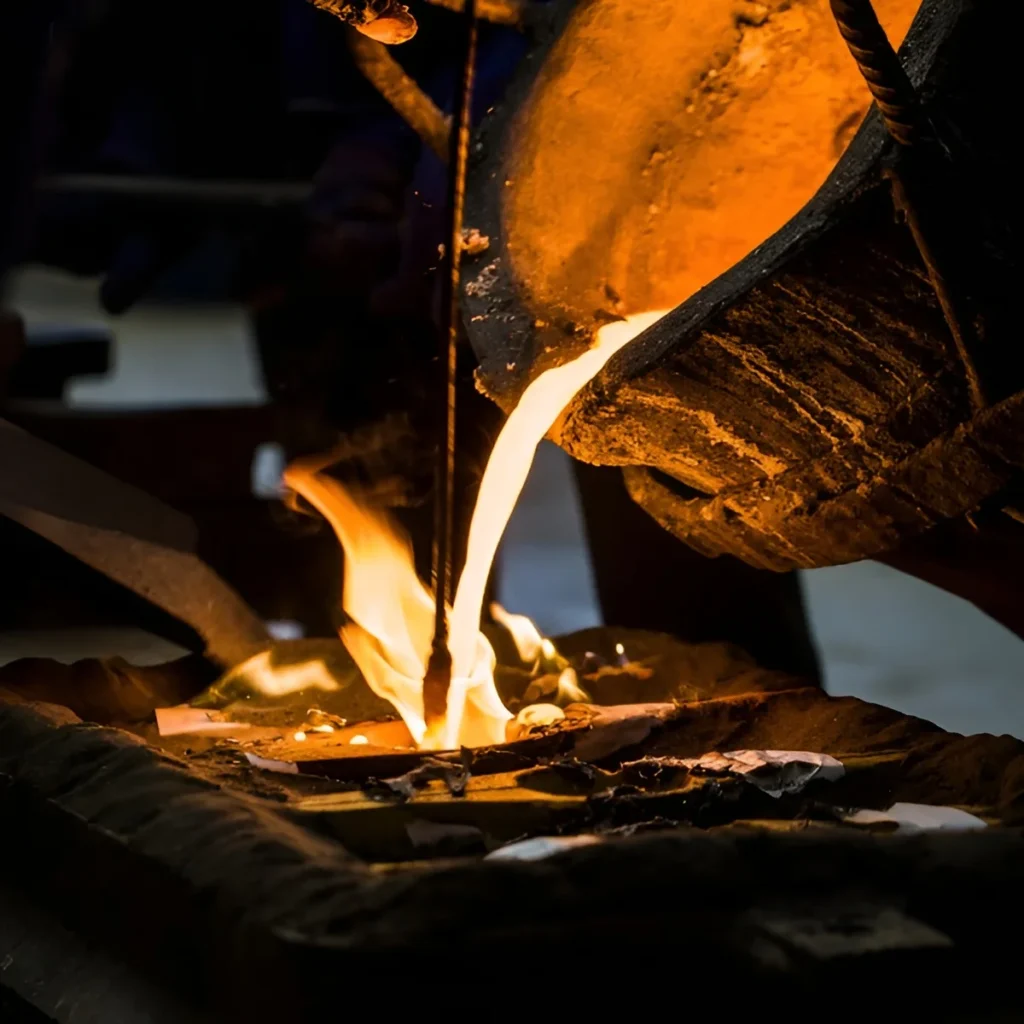
Thermal Processing and Delivery
Each printed shell undergoes binder burnout and high-temperature sintering to produce a highly dense ceramic structure ready for molten metal pour:
Ceramic Shell Mold Cost Factors
Our shells deliver a 50% cost reduction versus traditional investment casting—validated through our ARPA-E program with GE Vernova. Key pricing variables include:
Part complexity, integrated cores, and geometric features.
Build volume utilization, batch efficiency, and alloy selection.
Post-processing, thermal treatment, and delivery timeline.
Submit your CAD file and alloy specs for a detailed quote.
Why Choose Rapid Precision Castings for Ceramic Shell Molds?
Proven Expertise in Various Industries
Born from a 2006 DARPA Disruptive Manufacturing Technologies program, our LAMP™ platform is protected by 26+ patents across six countries and validated on active defense contracts:
Industry-Leading Patented Technology
Our LAMP™ system sets the standard in ceramic 3D printing—no competing platform matches our build volume, resolution, or alloy range:
Strategic Foundry Partnerships
Our established foundry partnerships give customers a ready-made production ecosystem — from the first prototype to the full series production — without building one from scratch:
Areas We Serve Across the United States
Based in Atlanta, Georgia, we serve aerospace, defense, and industrial customers across the U.S.:
Atlanta, Georgia—headquarters and manufacturing facility
Nationwide via partner foundry locations in Arizona, Michigan, Wisconsin and Indiana
Major aerospace hubs, defense contractors, and Air Force bases
Industrial and energy sector customers nationwide
Get Your Ceramic Shell Molds Today
Submit your CAD model and alloy specifications, and our team will respond with a project assessment and quote, typically within one business day. We’re available Monday through Friday, 8am–5pm ET:
Frequently Asked Questions About Ceramic Shell Molds
Our ceramic shells are compatible with hundreds of alloys across air-melt and vacuum-melt processes. Air-melt options include aluminum (A356, A357, F357, A380), stainless steels (304, 316, 17-4 PH, 15-5 PH), and nickel alloys IN 625. Vacuum-melt support covers equiaxed superalloys (IN 718, IN713LC, MAR-M247), directionally solidified alloys (René 141, René 80), and single-crystal alloys (CMSX-4, René N5). Medical-grade cobalt chromium moly (ASTM F75) is also available. All castings meet ASTM standards and Investment Casting Institute-stated ranges.
From CAD submission to ready-to-pour shell delivery, our process runs in days—not months. We've demonstrated a 10-day part-model-to-casting capability on active defense programs, including A-10 Thunderbolt II and C-5 Galaxy components, with first-article castings passing radiographic inspection. Traditional investment casting requires multiple weeks or months for the first parts. We operate in days and weeks—even for complex programs.
Our DirectPour™ process delivers a 50% cost reduction versus traditional lost wax casting by eliminating upfront tooling ($50K–$200K+), reducing scrap by 90%, and cutting energy consumption by up to 90% (validated through our ARPA-E program with GE Vernova). Savings compound for complex parts—an aviation oil pump case study eliminated 12 tooling sets, wax pattern and soluble wax core assembly, collapsing production to two steps. The more complex your part, the greater the advantage.
Our manufacturing facility is in Atlanta, Georgia, and we serve customers nationwide through direct production and our foundry partner network, including various locations across North America. We also work with customers' preferred in-house foundries, delivering ready-to-pour ceramic shells for standard metal casting procedures. For defense programs, we have active engagements at Tinker AFB and Robins AFB. Our engineering team supports all ceramic mold casting needs from CAD review through delivery.